
Why rest is incredibly impactful to your overall well-being and should be a priority
If there is one thing I’ve learned throughout my own healing journey, it’s this:
You can’t outgrow, out-hustle, or out-supplement your way out of poor sleep habits. And for the longest time, that’s what I tried to do. It felt like nothing was working when in reality I wasn’t working with my body.
I stayed up way too late, scrolling until my eyes felt tired enough to finally fall asleep, then tossing and turning only to drag myself out of bed in the morning, feeling like I hadn’t slept at all. My days truly felt heavy before they even began. I thought that’s “how I was wired” or that I was a night owl. Spoiler Alert: it wasn’t. My body was begging for balance – a rhythm, and I was just ignoring it.
Changing my sleep habits became the very first step in changing everything else on my growing to-do list. These days, I’m asleep no later than 10 pm, and I wake up no later than 7 am, and I move through my mornings with clarity instead of crippling anxiety and chaos!
I don’t dread bedtime anymore. I don’t spend hours tossing and turning. And I finally have the energy to build other habits that have me feeling more like myself every day! I absolutely cherish my sleep these days and can feel the drastic difference when I have a restless night. And to think that’s how I used to feel ALL the time.
This post kicks off my new Back to the Basics Series – small foundational shifts that quietly transform your life, one day and habit at a time.
We are starting where it all begins: SLEEP!

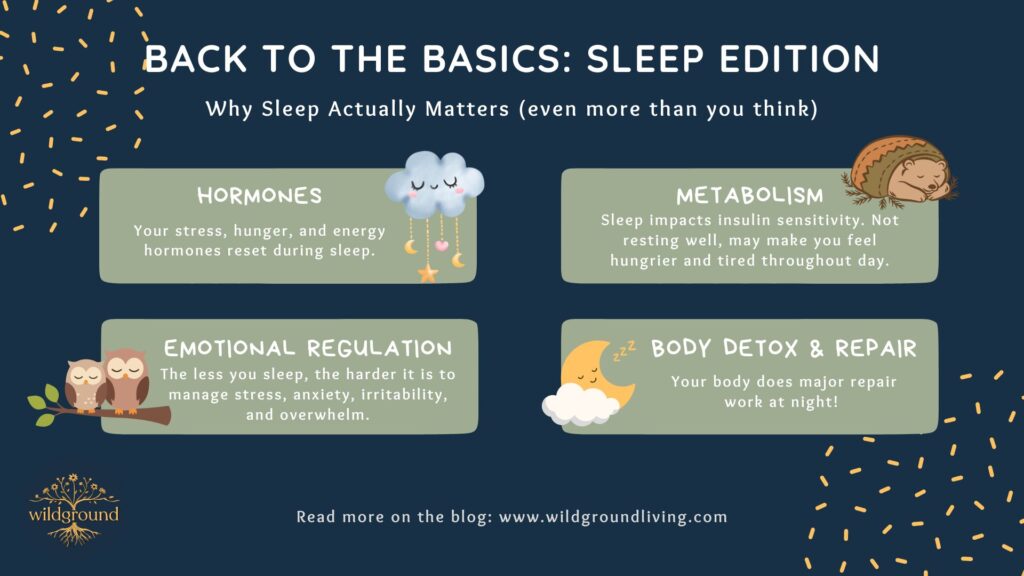
Why Sleep Actually Matters (even more than you think)
We hear all the time that sleep is essential, yet many of us are exhausted, struggling, and wondering why nothing seems to work. The truth is, sleep shouldn’t be a luxury. It is a requirement- one that influences nearly everything else:
Hormones: your stress, hunger, and energy hormones reset during sleep; a poor night’s rest = more stress, more cravings, more inflammation.
Metabolism & Blood Sugar: Sleep impacts insulin sensitivity. If you are not resting well, you may feel hungrier, less mentally clear, and tired throughout your day.
Emotional Regulation: The less you sleep, the harder it is to manage stress, anxiety, irritability, and overwhelm.
Healing & Detoxification: Your body does major repair work at night! Cell regeneration, muscle recovery, immune system support, liver detox, and clearing out metabolic waste from the brain.
When your sleep is off, everything feels harder.
My Story: Why sleep was the first habit I changed
Long before I changed my food, my movement, or my daily routines, I had to tackle my nights. Getting consistent, good rest night after night gave me the physical and mental capacity to focus on the other areas that needed work.
I didn’t overhaul everything at once. Every time I’ve tried that before, I failed miserably after about two weeks. This time, I decided to pick one thing and make it a priority until it became a habit, before moving on to the next. I started to shift my nightly routine slowly- 10- 15 minutes earlier every night until my desired bedtime felt natural.
While doing this, I slowly started shifting my routine by adding and swapping current nighttime habits until it felt attainable and easy. Things like making time to stretch every night, a galaxy projector to make the room feel cozy, a sound machine (I love rain sounds), my comfort show (this changes frequently), and new sheets. You may feel like you don’t have a routine now, but you do. It’s just not a good one, or it could probably be better!
It wasn’t and isn’t perfect, and it didn’t magically solve every problem, but it gave my body a chance to breathe again. I talk a bit about this in my previous reflection post.
If you’re stuck in the cycle of:
late nights → restless sleep → groggy mornings → caffeine → crashing → repeat
You’re not alone. And you’re not broken. Your body is simply asking for consistency and better-quality rest.


The surprising link between your sleep and what you eat
Most people don’t realize how deeply nutrition affects your nights rest:
- Blood sugar swings can cause middle-of-the-night wake-ups, racing thoughts, or that wide-awake-at-2 am feeling we all dread.
- Ultra-processed foods can disrupt hormones and digestion, making it harder to fall or stay asleep.
- Not eating enough during the day can also keep your body in a state of stress at night.
- Eating too late, especially sugary or high-carb foods, can disrupt your rest.
Often, sleep issues aren’t just a sleep problem; it’s also a nutrition problem.
As we move through this Back to the Basics Series– sleep, food, safety, hydration, movement- you’ll see how connected all of these “basics” really are and why they are so essential to master.

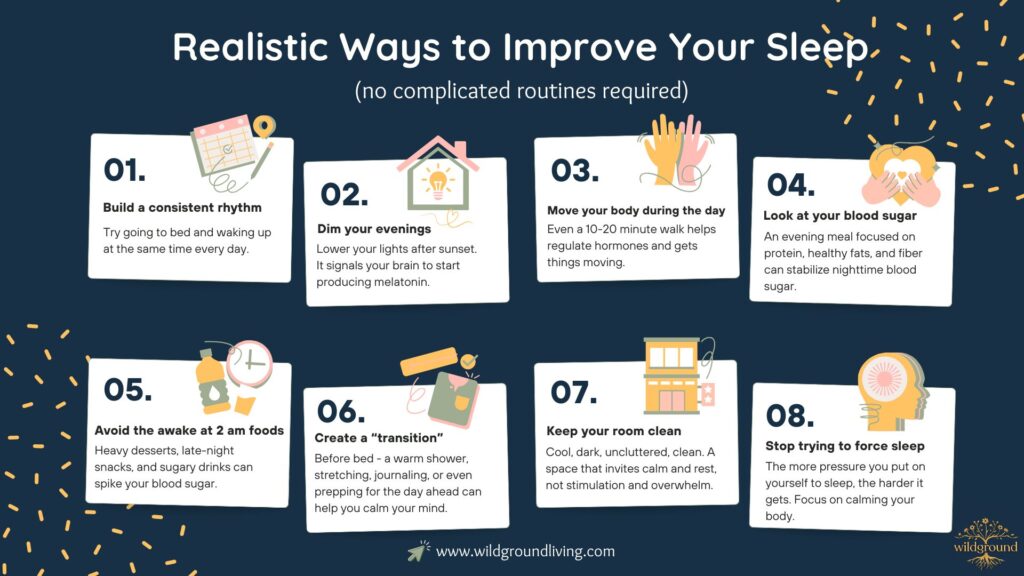
Simple, realistic ways to improve your sleep (no complicated routines required)
Here are a few gentle, doable shifts that can actually make a big difference:
Build a consistent rhythm
Try going to bed and waking up at the same time every day. Your body loves predictability. (even if it’s not your “dream” sleep schedule at first)
Dim your evenings
Lower your lights after sunset. Warm lamps, soft lighting, and no bright lights. It signals your brain to start producing melatonin, which makes you feel tired.
Move your body during the day
Even a 10-20 minute walk helps regulate hormones and gets things moving, which improves sleep quality.
Look at your blood sugar
A whole-food, lower-carb evening meal focused on protein, healthy fats, and fiber can stabilize nighttime blood sugar and reduce nighttime wake-ups. (everyone should care about their blood sugar.)
Avoid the wide-awake 2 am foods
Heavy desserts, late-night snacks, sugary drinks, or even a high-carb meal can spike your blood sugar. This is often the real hidden cause behind nighttime insomnia.
Create a “transition” before bed
No pressure for a routine, just something calming. A warm shower, stretching, journaling, or even prepping for the day ahead can help you wind down and calm your mind.
Keep your bedroom simple and clean
Cool, dark, uncluttered, clean. A space that invites calm and rest, not stimulation and overwhelm.
Stop trying to force sleep
The more pressure you put on yourself to sleep, the harder it gets. Focus on calming your body, not chasing sleep. (sometimes you have to “restart” your routine if you find yourself restless.)
You don’t have to do everything at once | Just start somewhere
Foundational habits don’t need perfection. Even just one or two small shifts create momentum. Sleep is often the first domino that sets others in motion.
If you’re exhausted or stuck in old patterns, just know you aren’t doing anything wrong. Your body is craving balance and rhythm. This is the beginning of the Back to the Basics Series. Simple approaches to the parts of life we tend to overlook but desperately need to refocus on and master.
Sleep is where it starts.
Food, air, movement, and hydration are some of what’s up next to continue rebuilding our foundation.
But for now? Let’s get you sleeping your best!