Back to the Basics: Why What You Eat Matters More Than You Think
Most people don’t wake up intending to feel tired, inflamed, bloated, or unwell.
Yet so many of us live there, day after day, accepting low energy, digestive issues, brain fog, pain, and chronic conditions as “normal.” We try to eat better. We follow the advice. We do what we’re told is healthy. And when it doesn’t work, we blame ourselves.
It’s not because people are just lazy or careless; the money spent every year in health and wellness says otherwise. It’s because we’re overwhelmed, confused, and misled. We are drowning in conflicting nutrition advice. What’s good, what’s bad, what’s healthy, what’s trending. And somehow still expected to magically know what’s right for our bodies.
I’m writing this post to say something very clearly:
YOU ARE NOT THE PROBLEM, YOU ARE THE SOLUTION
The food you eat is information and energy.
And your body responds to that information and energy every single day.
When the inputs change, the outputs change.
That’s not a moral statement. It’s biology. What you eat matters.

Why so many people feel confused about food
If you’ve ever felt like nutrition advice is overwhelming or contradictory, you are not wrong!
We are told to eat more whole grains, avoid fat, fear cholesterol, prioritize carbs for energy, limit protein, snack often, and “balance” or “limit” processed food and/or indulgences.
At the same time, we’re told that the rate of metabolic disease, obesity, insulin resistance, digestive disorders, hormonal issues, and chronic fatigue continues to rise.
So many people are doing their best and yet still feel worse.
This isn’t because people don’t care about their health.
It’s because the guidance is often generic, while our bodies are not.
And when a body is already struggling, the same diet that works “ in theory” may quietly be making things harder.
The standard American diet doesn’t work for everyone
Let’s talk about the standard American diet — appropriately abbreviated as SAD
We’re told that everyone should get 45–65% of their calories from carbohydrates, while the same guidelines acknowledge that roughly 74% of Americans are overweight or metabolically unhealthy.
That disconnect matters.
- If you’re gluten intolerant, you avoid gluten
- If you’re lactose-intolerant, you avoid lactose
- If you’re a vegetarian, you avoid meat
But carbohydrate intolerance, often tied to insulin resistance, prediabetes, type 2 diabetes, PCOS, and many other metabolic conditions, is rarely framed the same way.
Instead, many people are encouraged to continue eating in ways that leave them inflamed, hungry, fatigued, and frustrated, all while believing they’re “doing everything right.”
That confusion isn’t your fault.
But understanding it can change everything.
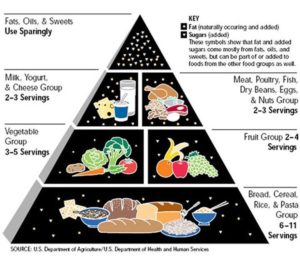
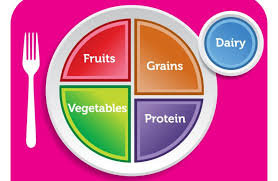
My breaking point with “healthy eating.”
For years, I followed advice I thought I was supposed to follow. I ate “healthy” foods. I limited fat. I focused on whole grains and vegetables. I avoided excess sugar with occasional cheats, of course, and assumed my discomfort was part of the process. No pain, no gain, right?
Instead, my digestive issues worsened along with my mental health.
I dealt with chronic bloating, swelling, fatigue, migraines, poor sleep, skin issues, and weight gain, to name a few. I took Gas-X, clutched peppermint tea like it was life support. And the more I tried to “clean up my diet, the worse I felt. The most confusing part? When I ate highly processed comfort foods, the ones we are told are the worst, my stomach was calmer.
I truly believed I was the problem or that something was wrong with me.
Listening to the body- Practically, not emotionally
Our bodies communicate constantly.
Not in a mystical way but through very real signals:
- Digestion
- Energy
- Swelling and inflammation
- Skin
- Sleep
- Mood
These aren’t random. They’re feedback.
The body is designed to survive and adapt. When it’s under constant dietary stress, symptoms appear. When that stress is reduced, healing becomes possible.
For me, changing what I ate wasn’t about perfection.
It was about removing the constant strain my body was under.

Using food as a healing tool
I personally didn’t make gradual changes at first- I was done feeling like shit!!
I cleaned out my kitchen, simplified my food choices, and chose a way of eating that reduces blood sugar spikes, prioritized protein, and focused on whole foods.
I personally used nutritional ketosis as a tool, note a rule; a way to give my body space to heal metabolically. I have come across some interesting studies on ketones and the positive impact on metabolic dysfunction and neurological disorders. I can share more about this and the macros I track daily if you’re interested!
What mattered most wasn’t the label; it was the result.
When the inputs changed, the outputs changed:
- Digestive pain eased
- Energy is returning
- Sleep has improved
- Inflammation is reduced, if not completely eliminated
- Weight shifted slowly and steadily (35 lbs down in 10 months)
- Mental health stabilized
I never counted a calorie.
I focused on nourishment, satiety, and consistency.
Healing wasn’t instant, and it wasn’t linear, but it was finally happening. Something was finally working.
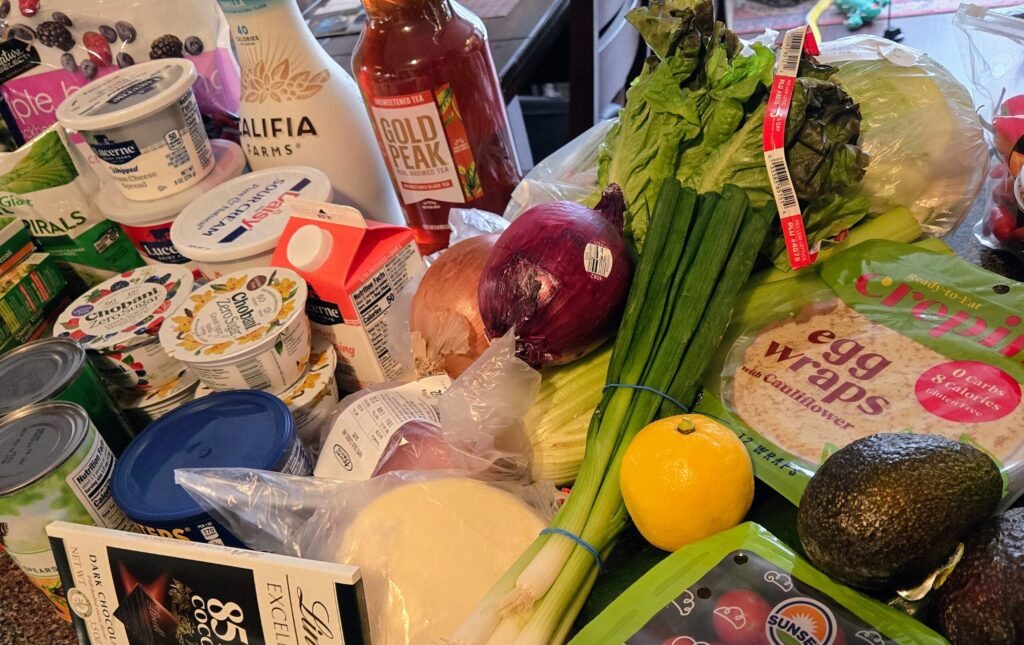
This isn’t about doing everything at once
Changing how you eat doesn’t mean:
- Eating perfectly
- Cutting out everything overnight
- Following someone’s rules forever
It means understanding that food can either support your body or make it harder to heal.
If you’re already working on the basics- sleep, hydration, movement, routine, safety- then dietary changes will amplify those efforts tenfold.
If you’re not there yet, even the small shifts matter. They build momentum. They create clarity.
And when you’re ready to go deeper, you’ll be doing it from a stronger foundation.

One thing I want you to know
You are not broken.
You are not weak
You are not failing because a particular way of eating didn’t work for you or an unhealthy way did.
Your body isn’t betraying you, it’s communicating.
And you get to decide how you want to respond.
Food isn’t about restriction or punishment.
It’s information
It’s support.
It’s a daily opportunity to make things a little easier on your body.
I’ll be sharing the simple, repeat-worthy meals that have supported my healing. Not because there’s one “right” way to eat, but because finding what works for you is worth it.
You are a reflection of what you eat
And you get to choose, every single day.

Please note the following
Wildground doesn’t promise quick fixes, perfect eating, or one “right” way to nourish your body.
We don’t offer medical advice, diagnoses, or guarantees, and we won’t tell you that changing one habit will solve everything.
Healing is personal. Progress is nonlinear. And what works for one person may not work for another.
What Wildground does offer is education, lived experience, inspiration, and grounded guidance so you can make informed choices, move at your own pace, and build habits that support how you want to feel.