
The first thing I changed wasn’t my food.
It was 11:30 pm and I was still on my phone. Scrolling. Not because I wanted to be. Because stopping felt harder than continuing. My eyes would go tired before my brain did, and I would lie there in the dark, waiting for sleep like it was something I had to earn. I had been trying to improve my sleep naturally for years without calling it that. I just knew something wasn’t working. I wanted to find a way to improve sleep naturally.
I thought I was just wired that way. A night owl. Someone whose body ran on a different clock than everyone else’s. It took longer than I want to admit to figure out that my body wasn’t broken. It was just waiting for me to stop fighting it.
I started small. I started shifting my bedtime by ten minutes. That was it. Ten minutes earlier, a few nights in a row, until that felt normal, and then ten minutes more. I didn’t overhaul anything. Every time I’ve tried to overhaul everything at once, I’ve quit in two weeks. I know that about myself now.
What I added along the way was small. Softer light in the evenings. A sound machine because I like the sound of rain. Sheets that felt good to get into. A stretch before bed, some nights, when I remembered. Nothing required. Nothing tracked.

What I noticed after a few weeks was that I stopped dreading bedtime. That sounds like a small thing. It wasn’t.
I was asleep by 10 most nights. Up before 7 without an alarm eventually. My mornings stopped feeling like something I was recovering from. I had enough in me to think about the next thing I wanted to change.
That’s the part nobody tells you about sleep. It’s not just about sleep. It’s about what becomes possible when your body gets what it actually needs. The food changes came easier. The walks happened. Things I had been trying to force for years started happening on their own, because I wasn’t running on empty anymore.
A few things that actually helped me improve my sleep naturally, if you’re in that place right now:
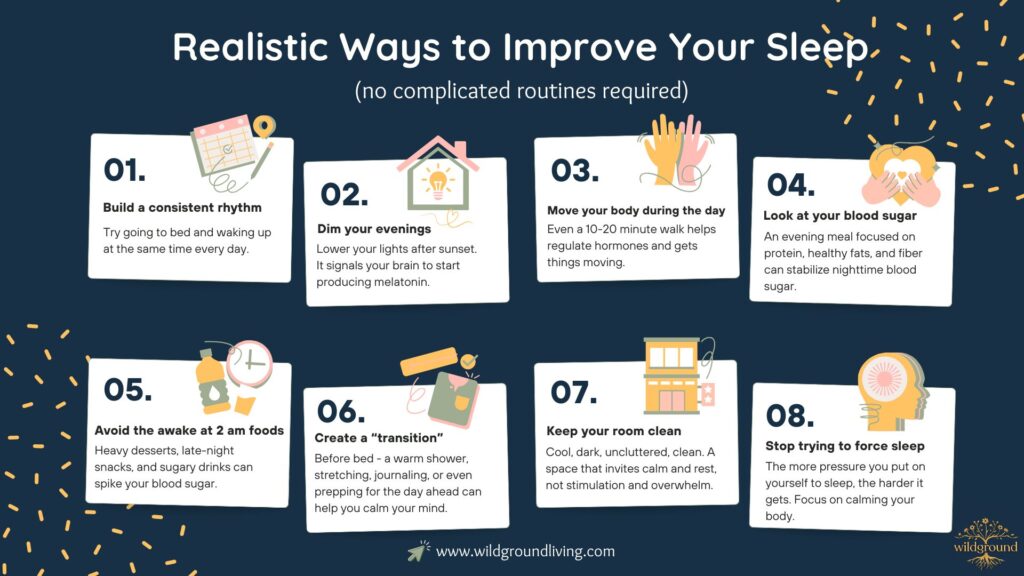
The timing matters more than the ritual. Going to bed and waking up at the same time every day, even on weekends, does something. Your body stops fighting the clock and starts working with it.
What you eat in the evening shows up at 2 am. Blood sugar swings are a real and underrated reason people wake up in the middle of the night with their heart going and their thoughts racing. A meal with protein, fat, and fiber before bed changed this for me.
The light in your house in the evening is telling your brain something. Bright overhead lights after dark say keep going. Lamps, low light, warm tones say the day is winding down. Your body is listening even when you’re not.
You don’t need a perfect routine. You need one thing to transition into sleep. A shower. A stretch. Putting your phone in another room. Something that says: this part of the day is over.
Start with the timing. Move it ten minutes. See what happens.
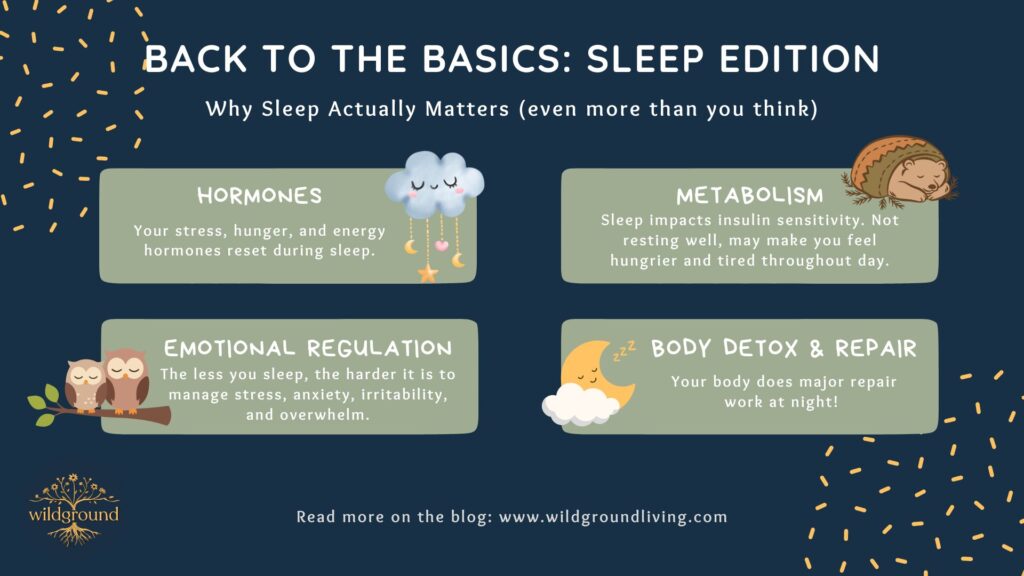
Why Sleep Actually Matters
Hormones: your stress, hunger, and energy hormones reset during sleep; a poor night’s rest = more stress, more cravings, more inflammation.
Metabolism & Blood Sugar: Sleep impacts insulin sensitivity. If you are not resting well, you may feel hungrier, less mentally clear, and tired throughout your day.
Emotional Regulation: The less you sleep, the harder it is to manage stress, anxiety, irritability, and overwhelm.
Healing & Detoxification: Your body does major repair work at night! Cell regeneration, muscle recovery, immune system support, liver detox, and clearing out metabolic waste from the brain.
When your sleep is off, everything feels harder.



2 Responses